Loading...
Serving Yakima, WA and surrounding areas. (509) 654-9682
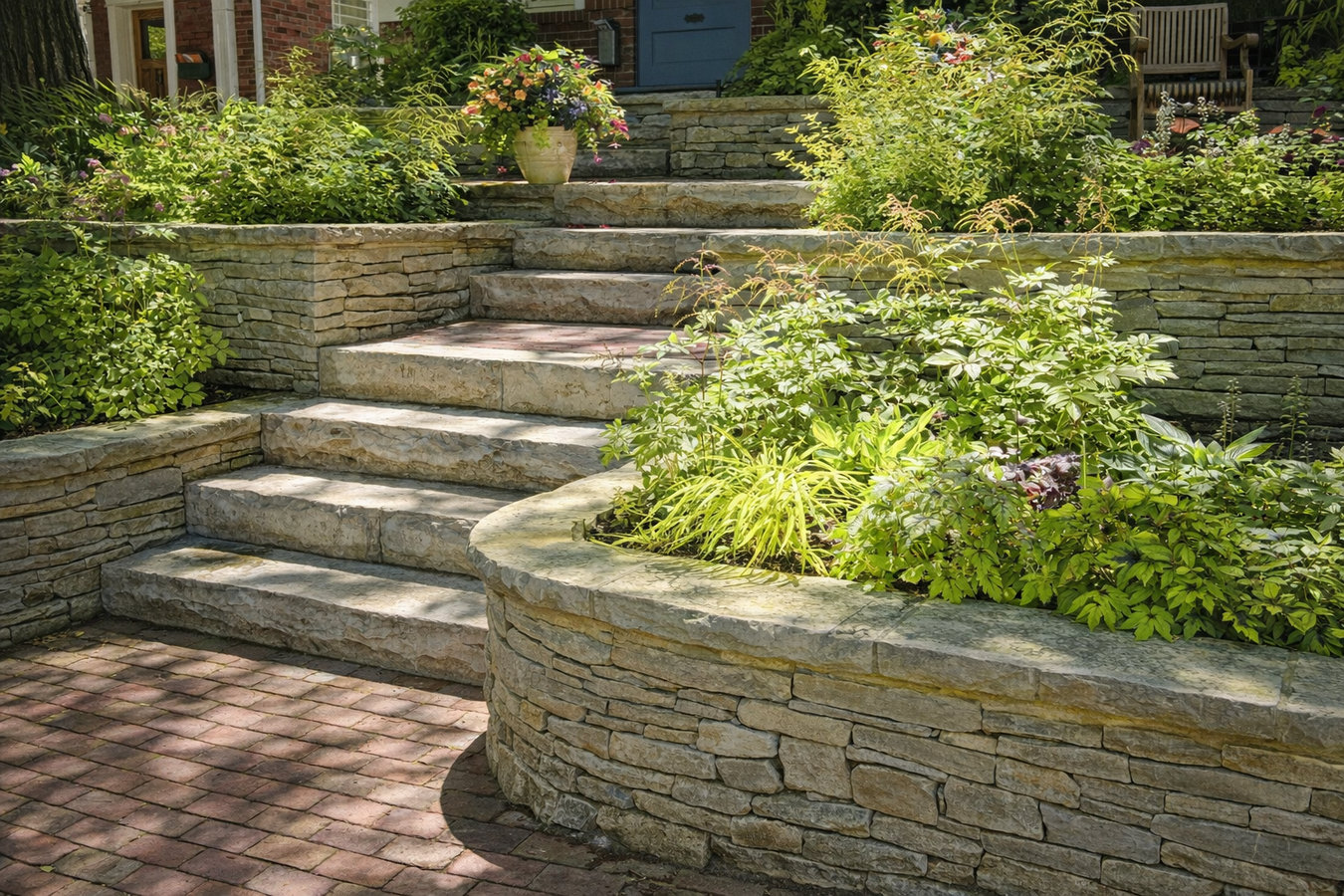
A Yakima slope that is eroding or a leaning wall that is losing the battle against the soil behind it both need the same answer - a properly built wall with drainage behind it and a foundation below the frost line.
Retaining wall construction in Yakima, WA involves excavating to below the frost line, building a compacted base, constructing the wall course by course with drainage material behind it, and backfilling - most residential walls are completed in two to five days.
A retaining wall holds back soil on a slope so it does not slide, erode, or wash away. Without one, a hillside yard can slowly lose ground after every wet Yakima spring - and that movement can eventually threaten a foundation, driveway, or landscaping. The two things that determine whether a wall lasts are the foundation depth and the drainage behind it. A wall sitting on a shallow base will shift every freeze-thaw cycle. A wall with no drainage will eventually bow outward from water pressure.
If the slope you are trying to control also has a failing concrete surface nearby, our masonry restoration work can address both issues in the same project visit.
After a wet Yakima spring, bare patches on a hillside, ruts where water has carved channels, or soil collecting at the base of a slope are signs of active erosion. Left alone, this gets worse every year - the soil washing away is often the same soil supporting landscaping, fence posts, or the edge of a driveway.
If an older wall is starting to tilt forward or gaps are opening between blocks or stones, the wall is losing the battle against soil pressure behind it. This is common in Yakima homes built in the 1970s and 1980s, where walls were often constructed without adequate drainage and are now showing the effects of decades of freeze-thaw cycles.
When water has nowhere to drain on a sloped lot, it collects at the bottom - often in late winter and early spring when the ground is still partially frozen. Pooling water near the foundation is a serious warning sign. A retaining wall with proper drainage redirects that water away from the structure.
When soil shifts on a slope, the movement does not stay contained to the slope. Concrete surfaces nearby - driveways, patios, walkways - can crack or heave as the ground underneath them moves. New cracks in hardscaped areas near a slope are worth having a masonry contractor look at before the problem spreads.
We build retaining walls using natural stone, concrete block, poured concrete, and brick - the right material depends on how tall the wall needs to be, what the slope and soil look like, and what fits the home visually. Every wall we build includes drainage behind it: a gravel backfill layer and a perforated pipe at the base that channels water away before it can build pressure against the wall face. For taller walls that trigger Yakima permit requirements, we handle the application and coordinate the city inspection so the project stays on schedule.
Many retaining wall projects connect naturally to other masonry work on the property. If the area behind the wall will become a patio or garden space, concrete block wall work can frame that space at the same time. For larger yards where multiple levels need to be stabilized, we design tiered wall systems that address the full slope rather than just the most visible section.
Best for slopes that are actively eroding or yards where usable flat space needs to be created from an otherwise steep or unstable grade.
Best for older walls that are leaning, bulging, or cracking because the original base was too shallow or drainage was never installed behind them.
Best for hillside lots with significant grade changes where a single tall wall would require engineering review or where multiple levels of usable space are desired.
Best for properties where water pools near the foundation or along the base of a slope, requiring both structural soil retention and a coordinated drainage plan.
Yakima sits in a river valley with significant elevation changes between the valley floor and the surrounding hillsides, and many neighborhoods feature lots with meaningful grade changes. Frost depth in Yakima runs typically 18 to 24 inches - a wall base that does not go that deep will move every winter as the ground freezes and thaws. The valley also receives most of its precipitation in late fall through early spring, and the wet-dry cycle causes clay soils to expand and contract in ways that put constant lateral pressure on any wall that is not built to account for it. Homeowners in Selah often see this on hillside properties where older walls built without drainage behind them start showing visible lean within a decade.
The permit side matters here too. Yakima requires a building permit for walls that reach four feet in height, and walls on or near property lines may face additional setback rules. We handle the permit application and coordinate the required inspection, which protects your investment if you ever sell the home. Homeowners in Union Gap have found this particularly valuable on lower-lying lots where a permitted wall with proper drainage documentation gives future buyers and lenders confidence the work was done correctly. For guidance on retaining wall construction practices, the University of Minnesota Extension publishes homeowner-facing guidance on wall construction and drainage, and Washington 811 requires utility lines be marked before any excavation begins.
We ask a few questions over the phone - roughly how long and tall the wall needs to be and whether you have noticed any drainage problems - then schedule a free on-site visit to assess the slope, soil, and drainage in person. You get a written estimate that covers materials, labor, permit fees if applicable, and cleanup. We reply within one business day.
If the wall requires a permit, we submit the application to the City of Yakima and coordinate a utility locate through Washington 811 before any digging begins. Permit review typically takes one to two weeks for straightforward residential projects. We handle both steps - you simply plan for that window between signing and the crew arriving.
The crew excavates to below Yakima's frost depth - typically 18 to 24 inches - and compacts a level base before the first course of wall material goes down. This is the loudest and most disruptive part of the project. The base work is also the most important - a wall is only as good as what it is sitting on.
The crew builds the wall course by course while installing drainage gravel and a perforated pipe behind it as they go. After backfilling and final grading, we coordinate the city inspection if a permit was required and do a thorough site cleanup. The wall is ready to use immediately after inspection - no curing period is needed for block or stone walls.
We visit the site, assess the slope and soil, and give you a written quote. No pressure, no obligation. Reply within one business day.
(509) 654-9682We excavate every wall base to below the local frost line - typically 18 to 24 inches in this region - before laying the first course of material. A wall that shifts or leans in Yakima almost always traces back to a shallow foundation. Building below the frost line means the ground can freeze and thaw as many times as it wants without moving your wall.
We install a gravel backfill layer and a perforated drain pipe behind every wall we build. Clay soils hold water, and water pressure is the most common reason retaining walls fail over time. Contractors who skip drainage are building walls that look fine at first but start to bow or crack within a few years as water has nowhere to go.
We have worked on sloped lots across the valley - from the hillside properties above the Tieton Drive corridor to the lower-lying lots in Union Gap where drainage is a constant consideration. That local experience means we understand how Yakima's clay soils and seasonal precipitation patterns behave on specific types of sites, not just in general terms.
For walls that require a City of Yakima building permit, we submit the application, coordinate the utility locate, and schedule the city inspection on your behalf. The Mason Contractors Association of America maintains professional standards for exactly this kind of permitted masonry work - you can check membership at masoncontractors.org. A wall built and permitted correctly protects your investment at resale.
Those commitments add up to a wall that stays straight, manages water correctly, and was built to Yakima's specific conditions - not adapted from a generic approach. Call us or fill out the form below and we will be back to you within one business day.
Repair or restore deteriorating masonry surfaces on the same property while the retaining wall project is underway.
Learn MoreFrame a garden, patio, or yard boundary with concrete block walls that work in coordination with the retaining wall system.
Learn MoreYakima's spring runoff season arrives fast - getting your retaining wall on the schedule now means the slope is protected before the wet season returns.